

Bar Luz: Bringing Mexico to Montréal, One Detail at a Time
Co-owner Lindsay Brennan on how light, darkness, and the warmth of Mexican craft shaped Bar Luz, Montréal's first fonda fina.
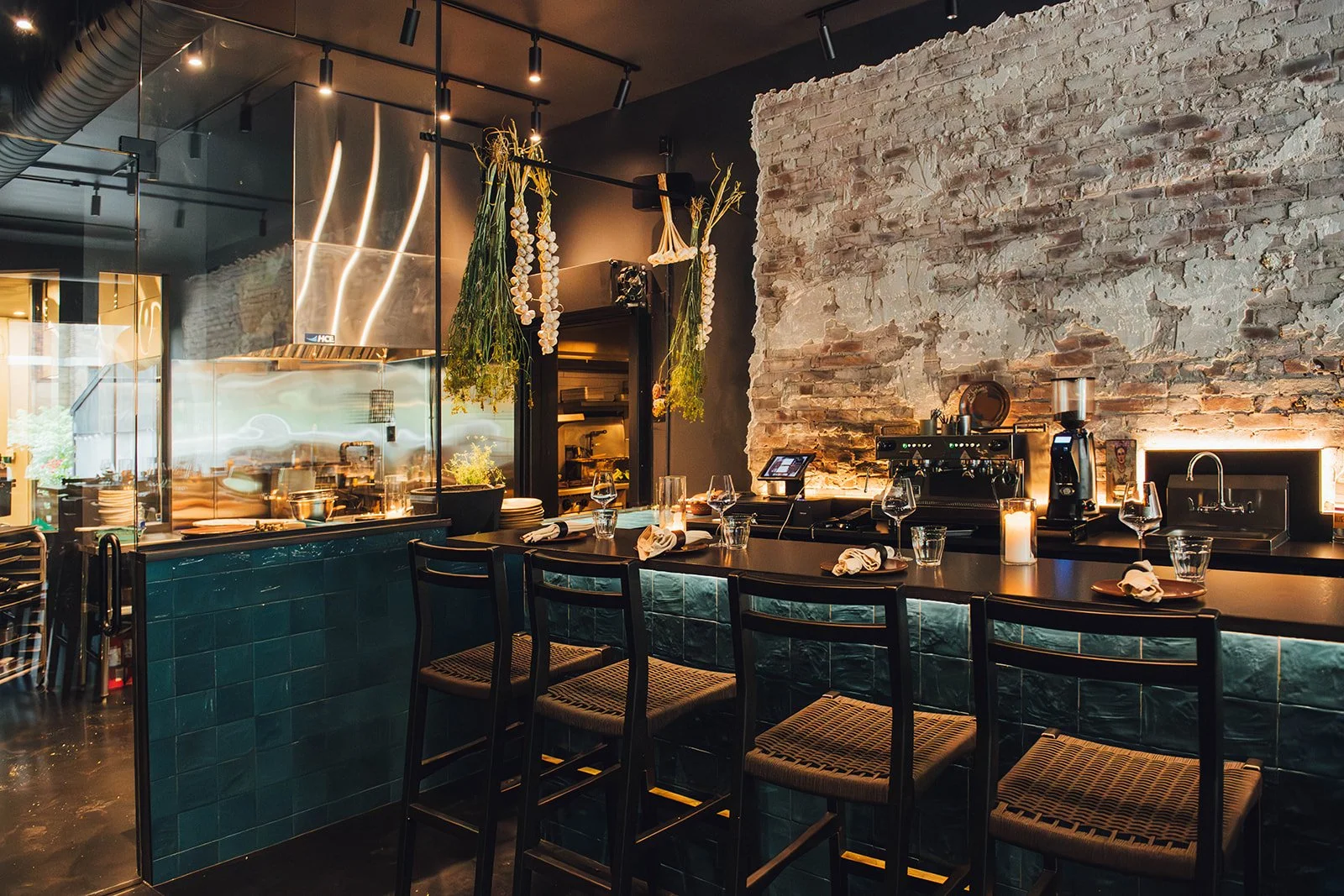
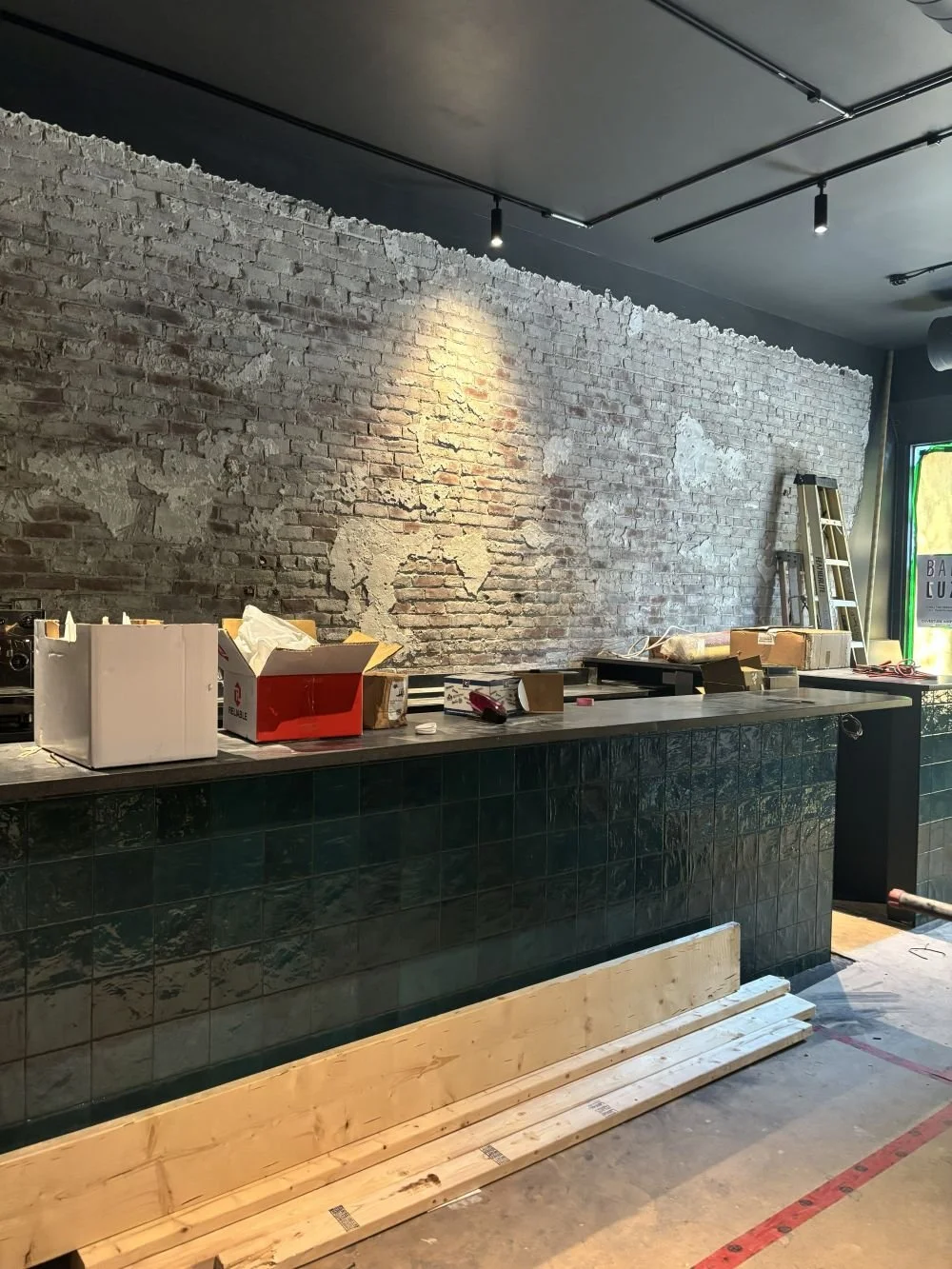
Dried garlic and herbs hang above the bar where the whitewashed brick wall, teal tiles, and open kitchen converge at Bar Luz.
Perhaps one of the most pleasurable aspects of owning a restaurant, in my experience, is designing it. From the initial concept to the constant tweaks and additions that emerge as a space evolves—often in parallel with our personal evolution and taste—design remains a living, dynamic process.
In an industry dominated by high-profile design firms, our design background and genuine passion for the craft, allowed us to shape the spaces ourselves. It also made certain our vision was fully and authentically realized.
It becomes a way to transmit our ideas and energy with honesty and precision, ensuring true coherence between atmosphere and gastronomy, and ultimately creating a fully immersive, unique, and authentic experience.
Design is also a welcome escape from the less glamorous realities of restaurant ownership: accounting, logistics, and the relentless problem-solving that fills most of our days.
Mexican-born chef Juan Lopez Luna and I imagined Bar Luz in Montréal during the winter of 2025. Located next door to Alma, our flagship restaurant that we opened in 2018 in Outremont, Bar Luz was conceived as both a counterpoint and a complement to our flagship restaurant. A more spontaneous, neighborhood-driven space in contrast to Alma’s nine-course tasting menu and increasingly elusive reservations (recently named on the list of 50 Best Restaurants in North America).
Bar Luz is a fonda fina: an intimate, elevated expression of traditional Mexican cuisine inspired by the everyday eateries of Mexico. A first of its kind in Montréal, it honors alta cocina mexicana while remaining grounded in warmth and accessibility. The menu weaves Mexican heirloom corn with local Québec ingredients, drawing inspiration from the matriarchs of Juan’s family and the mountain-inspired, sun-kissed, largely masa-based comfort food of his childhood.
Bar Luz is the second project in what we call the Luz trio. It followed the launch of Terraza Luz, our back-alley taqueria, and precedes Molino Luz, a tortilla production kitchen anticipated in 2026.
Luz—meaning light in Spanish—is both the name and the guiding force behind the design concept. While Terraza Luz is built around the natural afternoon light in our alley, Bar Luz explores a more deliberate, controlled use of light. Beyond its physical presence, light functions symbolically: as optimism, as warmth, and as the daily pursuit of brightness in moments when the world can feel heavy. Luz is about sustaining ilusión—hope, excitement, and belief amid chaos—through connection and shared human experience. When darkness deepens, it only illuminates the light more clearly, revealing the beauty and resilience of life.
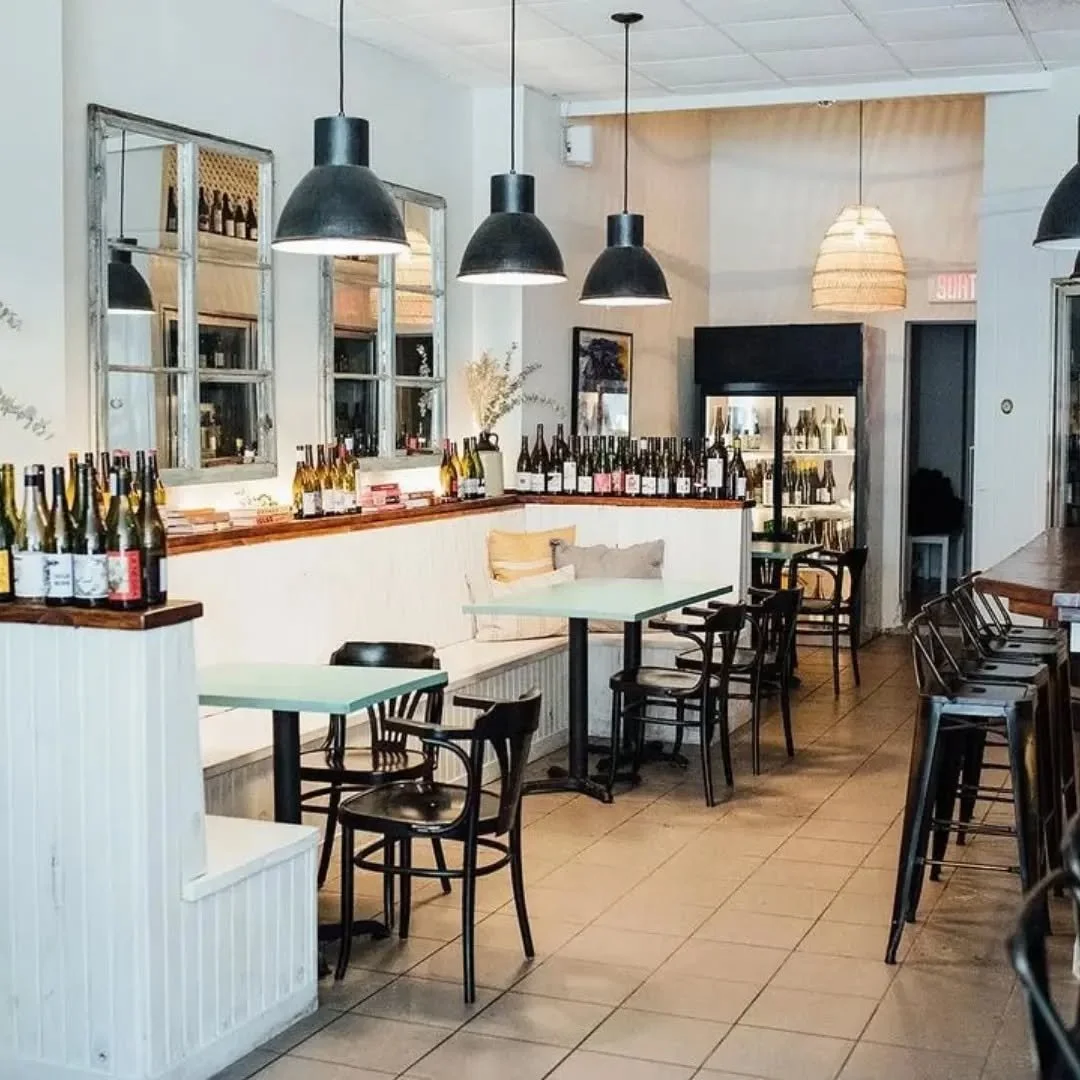
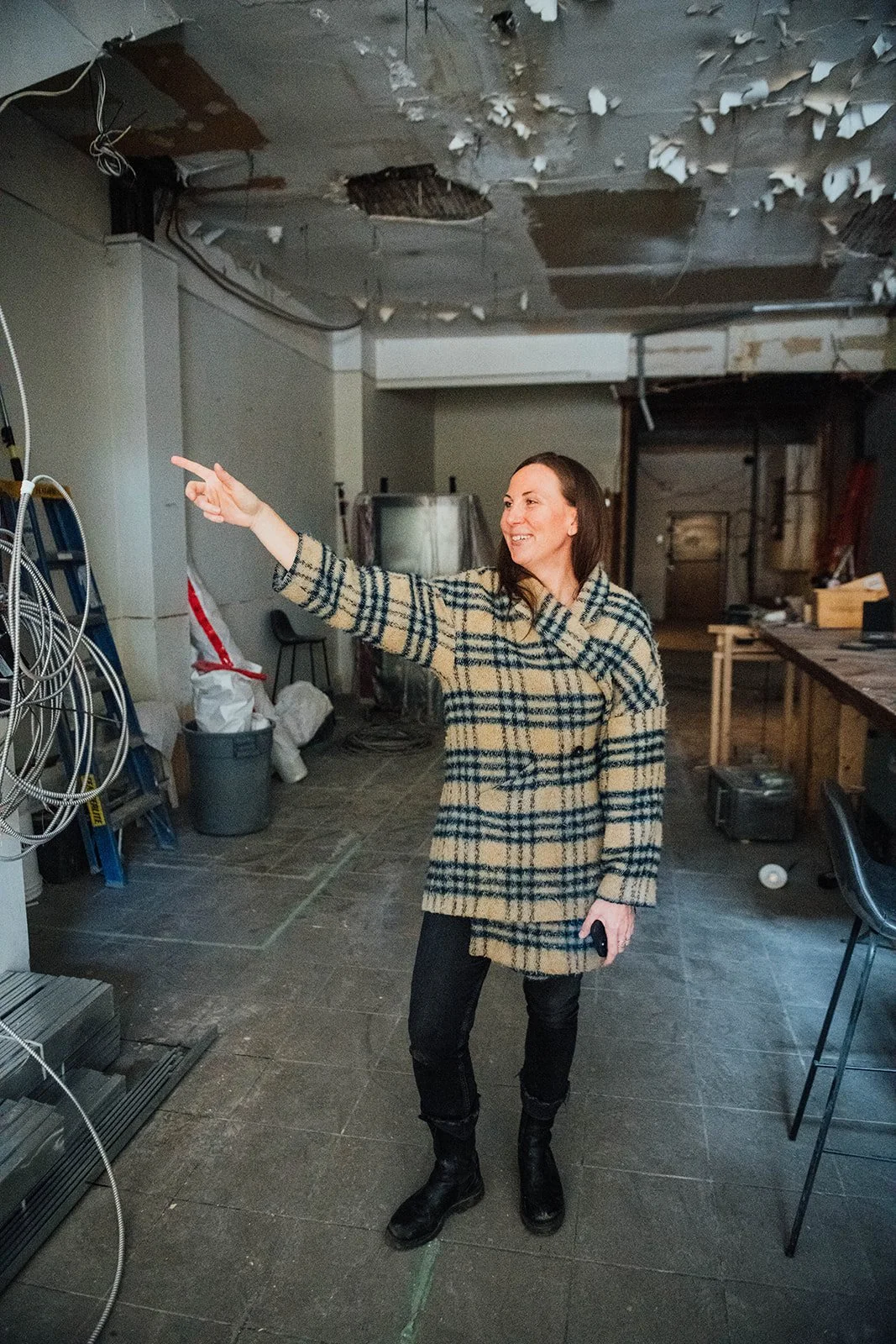
The space was once home to Tinc Set, its bright, airy palette giving way to the moody, light-driven atmosphere of Bar Luz.
When Juan and I began developing Bar Luz, we knew we wanted it to feel both familiar and surprising. It quickly became the most ambitious design project of our careers—a process filled with equal parts pressure and possibility.
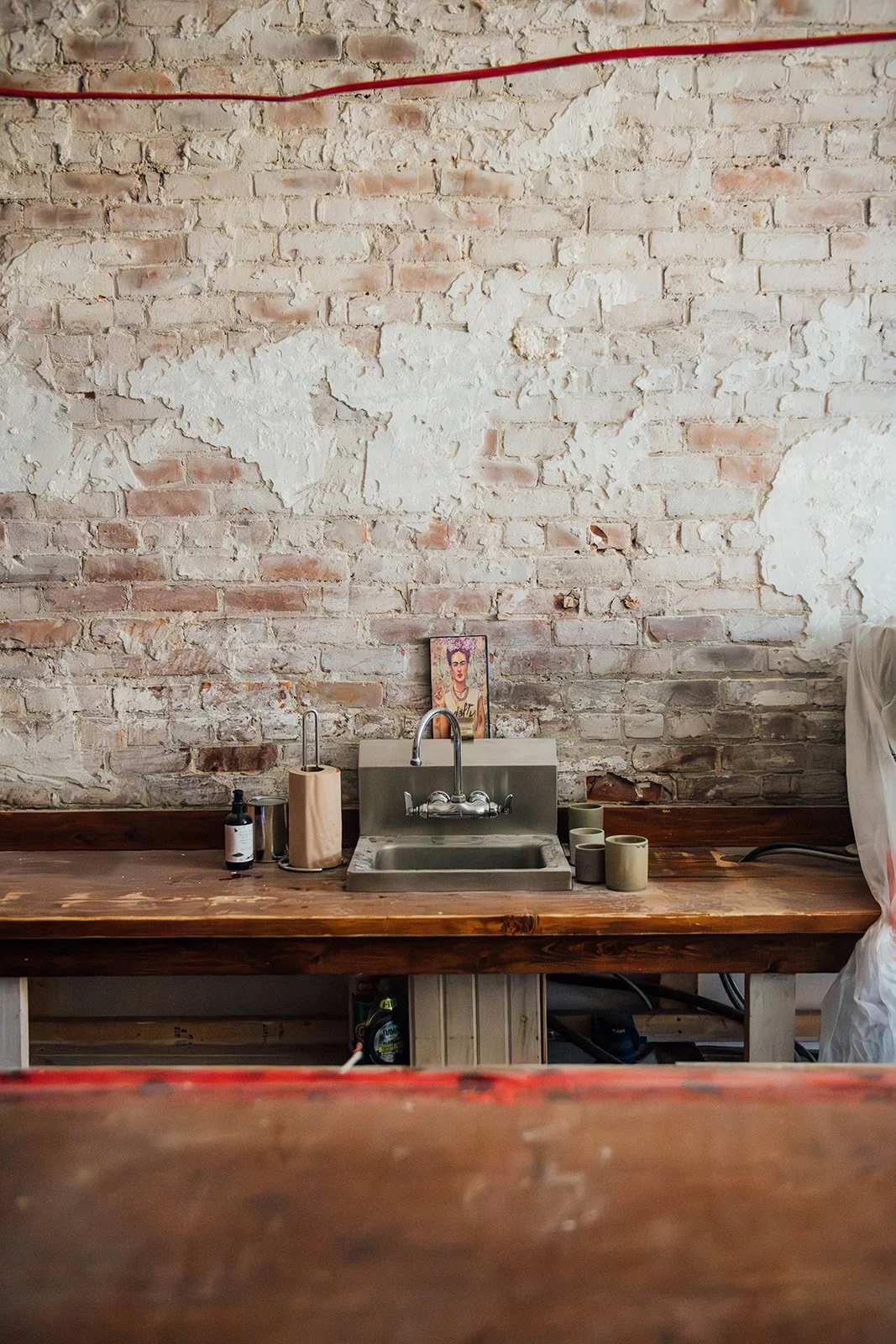
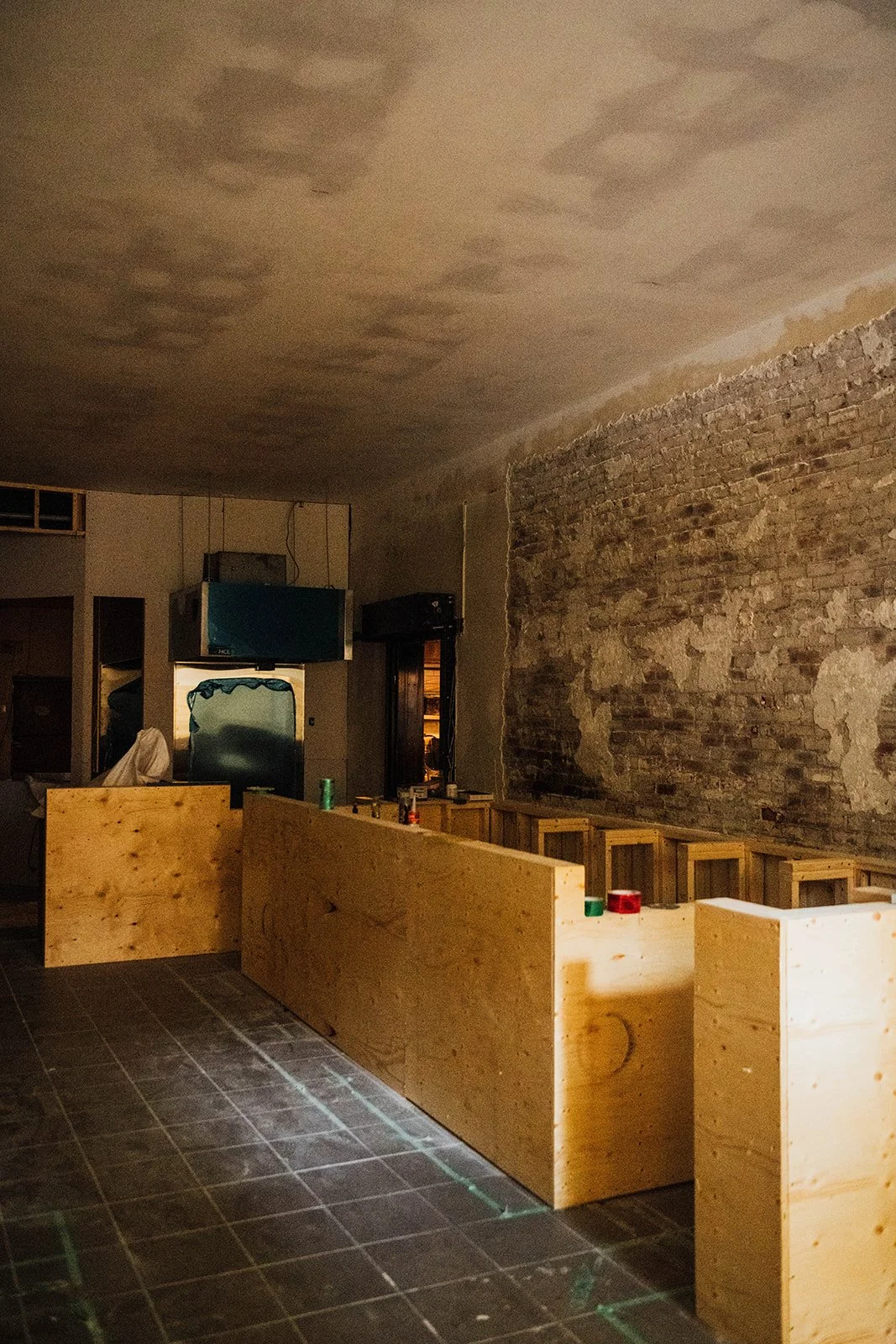
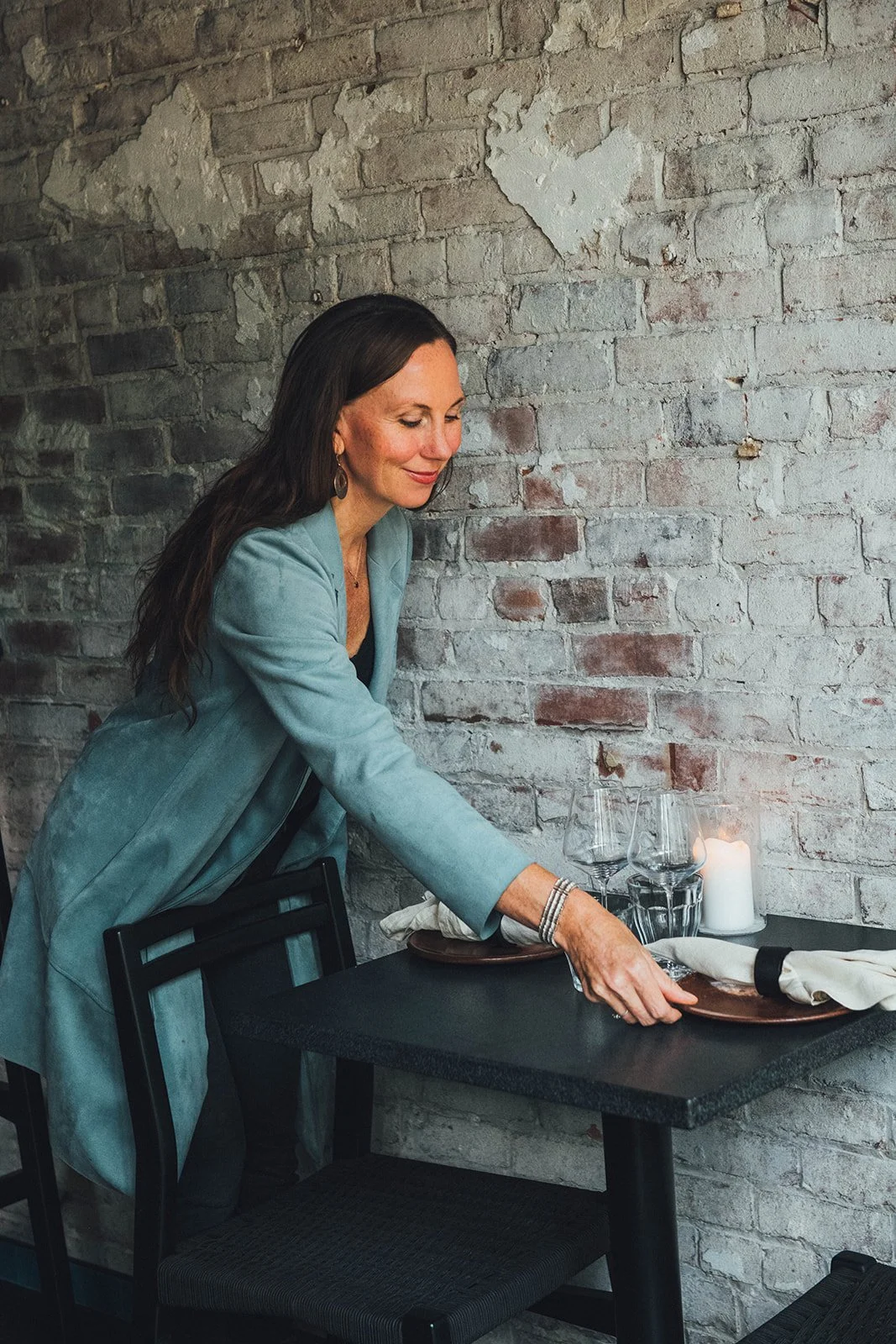
The space itself carries history. Formerly our Catalan wine bar, Tinc Set, it was once a neighborhood dépanneur—a corner store remembered fondly by anyone who grew up “dans le coin.” If you were lucky (and far too young), it was where you could buy beer, often lukewarm thanks to an owner notorious for saving on refrigeration. That layered past mattered to us. We didn’t want to erase it; we wanted to build on it. It was a unanimous decision to incorporate Tinc Set’s white-washed brick wall as a focal point behind the bar. While Tinc Set’s design and budget were shaped by pandemic realities and a strong emphasis on practicality, Bar Luz reflects a more mature expression, one aligned with our current place in the industry as well as our evolving vision.
Like so many projects, our greatest challenges came from construction delays. Yet those delays created unexpected opportunities: time to deepen key collaborations and to weave human relationships and artisanal elements into the fabric of the space—details and important layers that would have otherwise been difficult to develop within the original timeline.
Working with Montréal-based artists, many with Latin American roots, added depth and meaning to both the process and the final design. Supporting and showcasing their work felt essential. Integrating Mexican designers was equally important. We wanted the space to honor the warmth, ritual, and craftsmanship of Mexican design while offering something entirely new for Montréal. Every decision was guided by memory: by the feeling of walking into our favorite fondas and street corners in Mexico City and Oaxaca, where spaces rarely feel overdesigned, yet everything feels intentional and deeply rooted in culture and tradition. Working with people who are passionate, generous, and share our values is at the heart of what I cherish most—whether in wine, food, or design.
“Every decision was guided by memory: by the feeling of walking into our favorite fondas and street corners in Mexico City and Oaxaca, where spaces rarely feel overdesigned, yet everything feels intentional and deeply rooted in culture and tradition.”
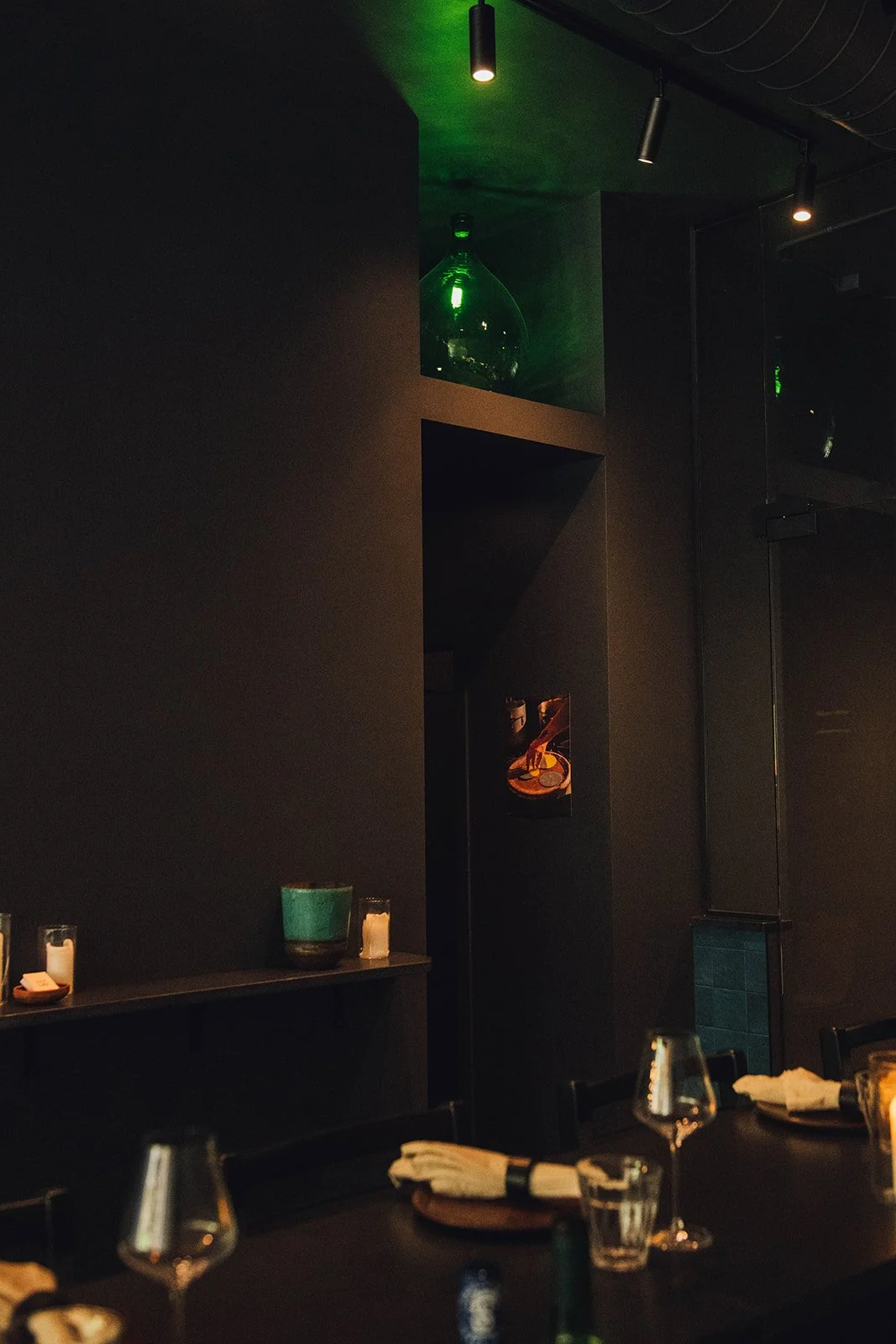
With light established as the lead design element, and with floor-to-ceiling windows anchoring the front of the space, darkness became its necessary counterpart. An off-black, charcoal backdrop would let the light glow rather than compete. Early in the process, we committed fully to Benjamin Moore’s Wrought Iron, color-drenching the space by painting the walls and ceiling. The modern, epoxy floor, cool and smooth underfoot, is as close to the same shade as possible. Warm yet modern, the color absorbs light while allowing illumination, shadow, and reflection to become the true architectural elements.

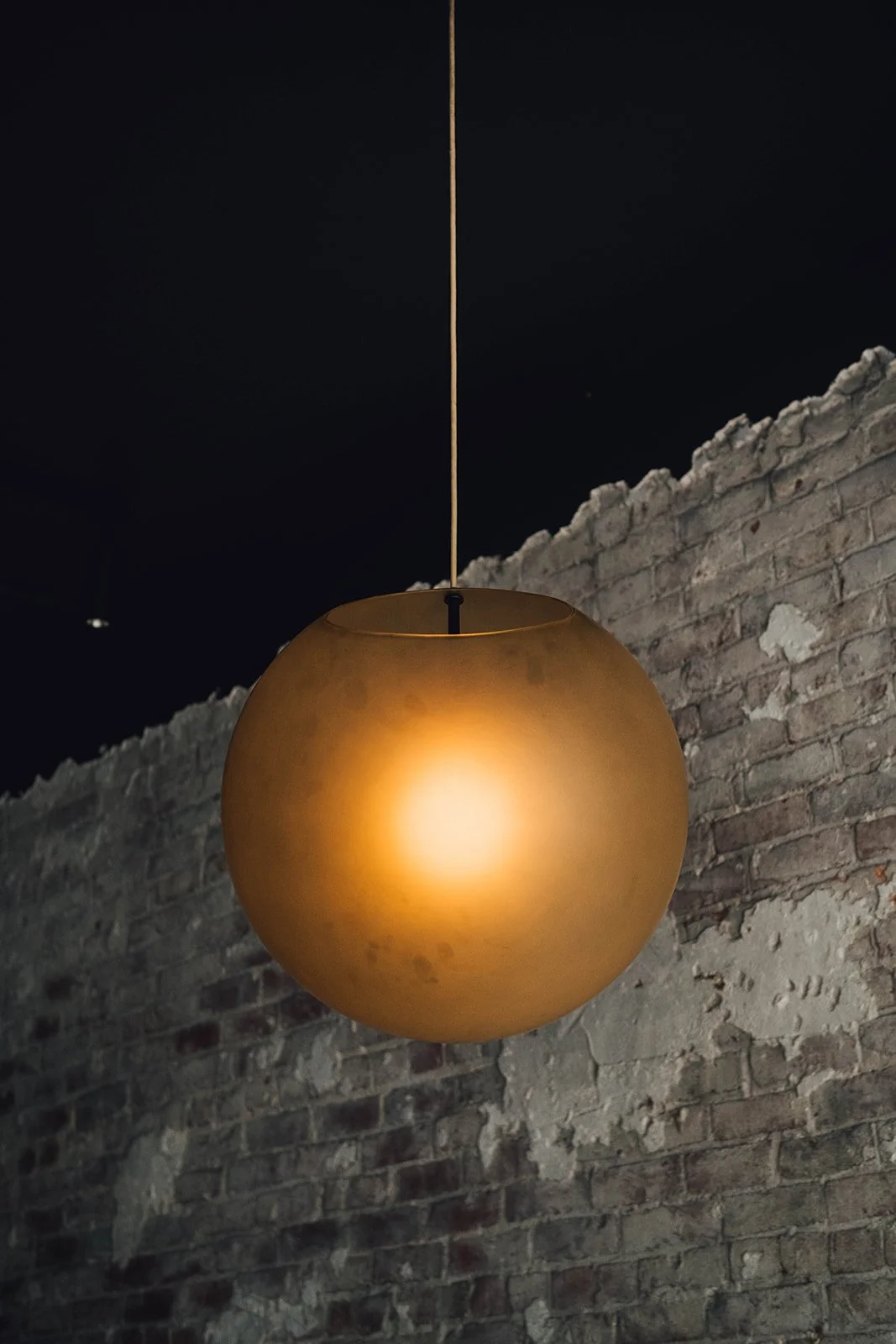
Lighting undoubtedly plays a central role in the story. The main fixture, from Studio Botte’s Faro collection, designed by Colombian-Québécois designer Philippe Charlebois-Gomez, hangs prominently in the front window. Crafted from repurposed street lamps from Expo 67, it is visible from the sidewalk and serves as a striking focal point from every angle in the restaurant. Its asymmetrical form and steady glow draw the eye without ever overwhelming the space.
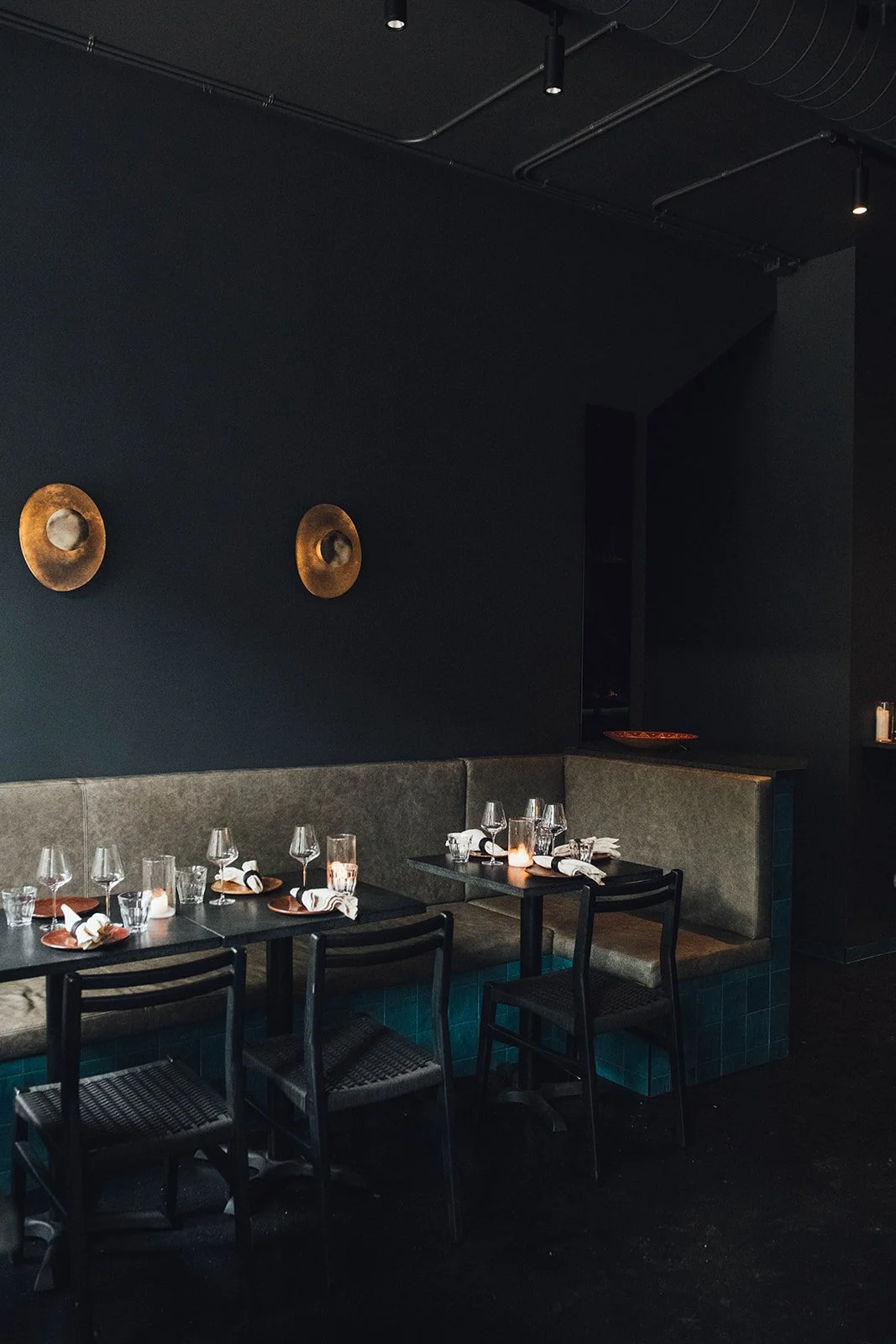
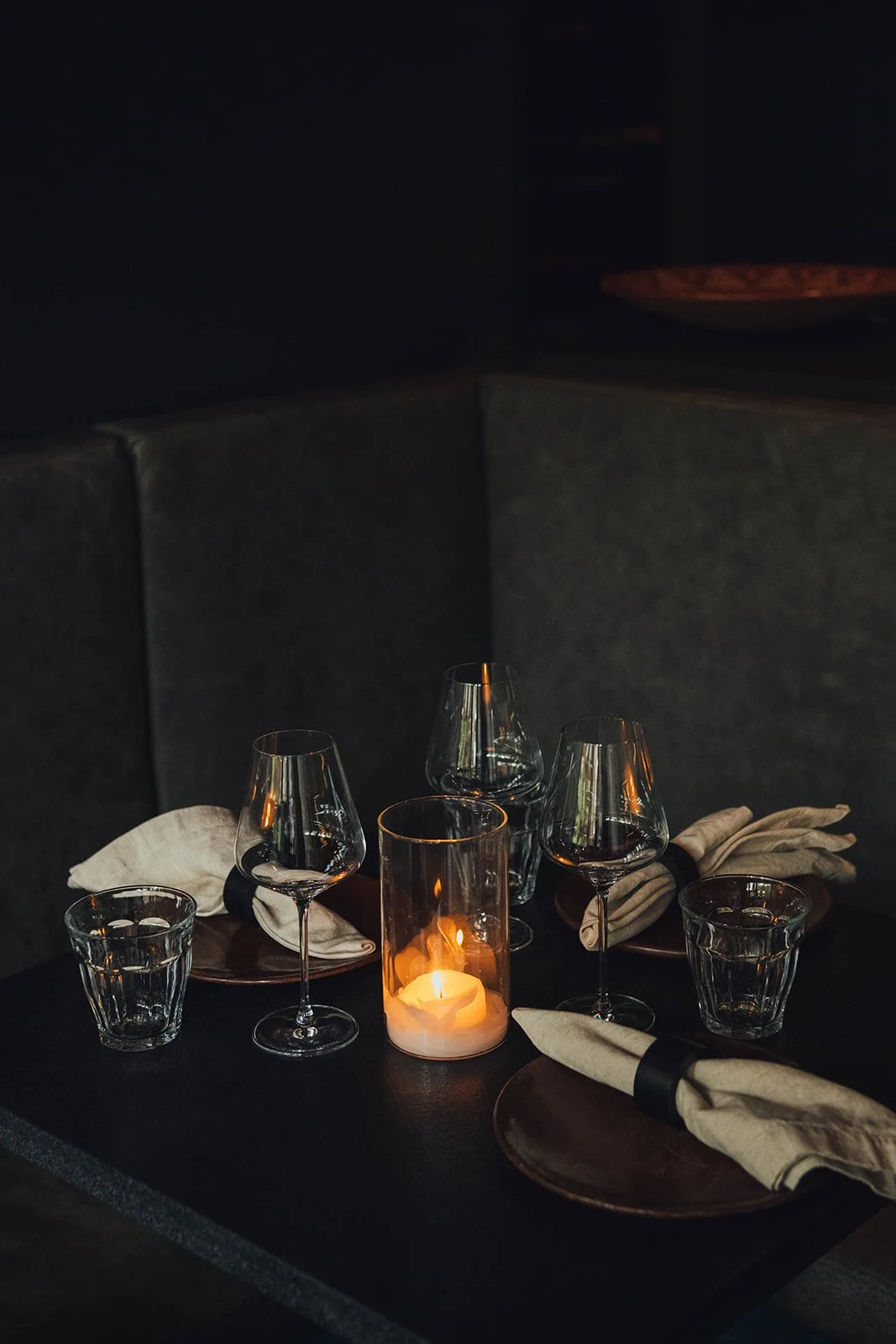
We then collaborated with the up and coming industrial designers from Mile-Ex–based Atelier Fromenta (friends and colleagues) to create custom fixtures for the wall above the banquette. They brought in Mexican-Montréaler ceramicist Emmanuelle Rocque, who used an ancestral Mexican clay-firing technique involving oil barrels. Each sconce is entirely unique in shape, texture, and color. The result is a series of oval pockets of warmth that cast gentle, shifting shadows as the evening unfolds. We wanted light to move across the space with the same ease and grace found throughout Mexico.
Materials and textures were chosen with equal intention. From dark gray leather banquettes with the traditional puckered texture, to handwoven tortilla warmers, and the soft glow of tall pillar candles, each element contributes to the atmosphere. The gorgeous photographs by Colombian-Mexican photographer Ana Lorenzano of Juan’s grandmother making tortillas while we were visiting last winter, are placed against the off-black walls, their warmth and shadows infusing the room with nostalgia. From above the kitchen, dried garlic, chile, and herbs hang in rustic bundles, their textures and scents recalling Oaxaca’s sunlit outdoor kitchens.
Tile became a pivotal design element. We searched for a teal square that could evoke the ocean, both its movement and reflective quality. A dark mortar proved essential, as did the expertise of a master tile-setter who arrived during Québec’s construction holiday to help us achieve near-perfect results. The linearity of the tiles, paired with ultra-fine grout lines, became an unexpected defining detail. As light dances across the glazed surface, it shimmers and shifts, creating a wave-like effect far beyond anything we had imagined. The result was so compelling that we extended the tile into additional areas of the space.
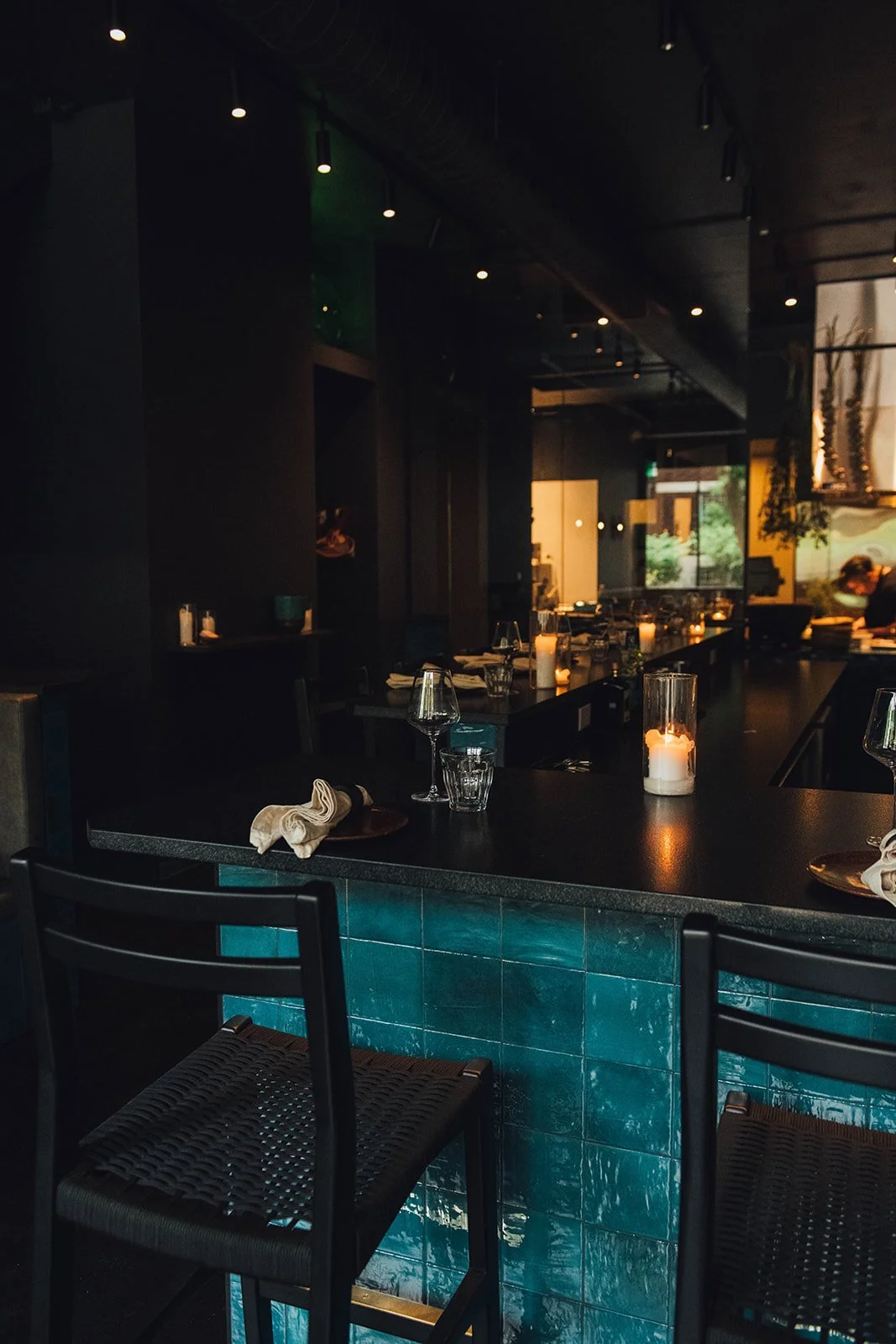
One of our earliest collaborators was La Metropolitana, whose furniture appears in so many of our favorite restaurants in Mexico City. Their craftsmanship is effortless yet soulful. The handcrafted stools and chairs, rooted in traditional woven tejido designs, are essential in an otherwise minimalist room. Their solid wood structure, intentional lines, and deep, warm black finish anchor the space while reinforcing the story we wanted to tell.
The pottery comes from the Oaxacan collective 1050 Grados, which collaborates with women ceramicists from small towns outside the city, each specializing in a distinct color and style. For Bar Luz, we incorporated pieces in off-black, terracotta red, and natural beige. They were chosen not only for their beauty, but for their ability to ground the space in craft, memory, and connection to place.
At its heart, Bar Luz is a conversation between past and present, between the cities we love and the city we call home. Together, these elements—light and darkness, reflection and memory—form the foundation of Bar Luz: a neighborhood bar, a fonda fina, a place of ritual and return. Designed from the ground up by those who imagined it, the result even surpasses what we initially envisioned. Thanks to the craftsmanship, talent, and human energy behind each collaboration, the space has transformed from a former corner store-turned-casual wine bar into a sophisticated Mexican cantina that mirrors our own evolution as restaurateurs.
Bar Luz is a place shaped by people, nostalgia, passion and intention. It stands as living proof that with a clear vision and a thoughtful approach, a dining room can transcend its role, becoming far more than just a restaurant.
About DINR
DINR offers same day and exclusive reservations at the best restaurants in Montréal and across Canada. Since its inception in Montréal, DINR has built a cult following among award-winning chefs, discerning diners, and avid travellers passionate about unparalleled culinary and hospitality experiences.

Author’s bio and summary.
Lindsay Brennan is a Montréal-based restaurateur, sommelier, and wine importer, and the co-owner of Alma, Bar Luz, and Terraza Luz. With 25 years in the hospitality industry, she is the founder of Importations Vin i Vida, a wine agency specializing in small-production Catalan and Spanish natural wines, and a three-time nominee for Best Sommelier at the Lauriers. Alma, her flagship restaurant with chef Juan Lopez Luna, has been named one of North America's 50 Best Restaurants and Best Mexican Restaurant Outside of Mexico by Culinaria Mexicana.
Bar Luz | Mexican | 1233 Av. Lajoie, Montréal, QC | Reserve with DINR